
Why You Should Never DIY Auto Tint Installation
Cesar Velasquez | June 11, 2026
The do-it-yourself phenomenon has transformed how vehicle owners approach automotive enhancement, inspired by an abundance of online tutorials and digital content. Projects that once demanded specialized facilities are now viewed as weekend challenges by enthusiastic car owners looking to personalize their rides. Among these modifications, applying dark film to vehicle glass stands out as an incredibly popular choice due to its immediate visual impact and the perceived simplicity of the process. This widespread interest leads many individuals to attempt the project in their personal garages, assuming that patience and a basic blade are the only requirements for success.
However, the reality of working with delicate window films reveals that this undertaking requires far more precision than a standard weekend project. Achieving a flawless finish requires a controlled environment, specialized physical techniques, and a deep understanding of glass curvature. Without formal training, vehicle owners frequently find themselves facing unexpected complications that ruin the appearance of their vehicles and compromise safety. This comprehensive examination will explore the complex variables that make professional auto tint installation the only reliable method for achieving optimal results, highlighting the hidden challenges that arise when trying to replicate specialized trade skills at home.
Selecting Premium Architectural Materials
Navigating the diverse marketplace of window films requires a high level of specialized knowledge that the average consumer simply does not possess. Modern window films are engineered using advanced chemical compositions, including ceramic nanoparticles, carbon layers, and metalized coatings, each designed for specific performance metrics. Selecting the wrong type of film can lead to inadequate heat rejection, altered exterior reflectivity, or interference with internal electronics. Professionals spend years studying how different glass types interact with various film compositions to ensure the selected product matches the climate and the specific structural needs of the vehicle.
Many DIY tint kits available online or in stores offer lower-grade films, often lacking in durability and effectiveness. Professional-grade materials boast superior UV protection, a reason why more than 65% of industry professionals emphasize their importance over mere appearance, according to Future Market Insights. When vehicle owners purchase consumer-grade products, they miss out on these advanced formulations, resulting in rapid fading and purple discoloration. Access to high-tier inventory is strictly limited to authorized dealers, meaning that true protection from solar radiation is only achievable through an authorized professional auto tint installation.
Executing Exact Geometric Cuts
The process of shaping window film to match the precise dimensions of automotive glass requires a steady hand and an understanding of spatial geometry. Every vehicle model features unique window borders, complex compound curves, and hidden black ceramic matrices known as frits. Standard consumer tools are completely inadequate for achieving the seamless edges required to prevent lifting over time. Professionals utilize specialized software and high-tech plotters to cut film with absolute mathematical precision, ensuring that the material fits perfectly against the glass boundaries without any overlapping gaps.
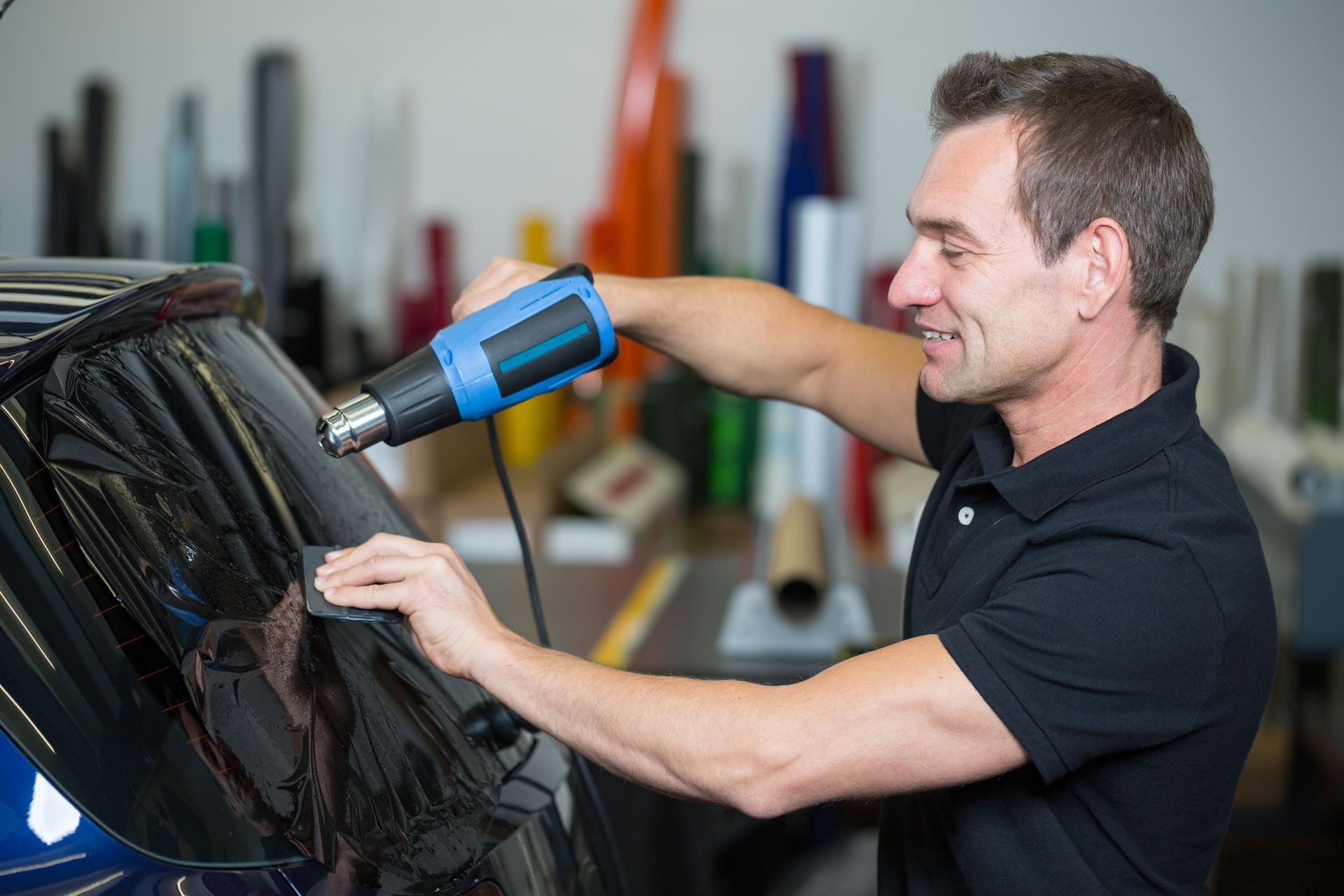
When cuts are performed manually without specialized training, errors are virtually guaranteed. Even a fraction of a millimeter of exposed glass can ruin the visual uniformity of the window and create an entry point for moisture and air. Furthermore, the rear windows of modern vehicles feature complex dual-axis curvatures that require advanced heat-shrinking techniques before the film can be applied. Attempting to shrink film without understanding material elasticity usually results in permanent creases, scorched film, or wasted material, turning an affordable project into an expensive exercise in frustration.
Preventing Permanent Surface Imperfections
Adhering film to a vertical glass surface requires an environment that is completely free of airborne contaminants. The slightest speck of dust, pollen, or lint floating in the air will become permanently trapped beneath the adhesive layer, creating a highly visible bubble. Professional installation bays utilize specialized air filtration systems, moisture control, and anti-static measures to maintain pristine conditions. Without these environmental controls, a clean workspace is impossible to maintain, and the final product will inevitably suffer from widespread texturing and cosmetic defects.
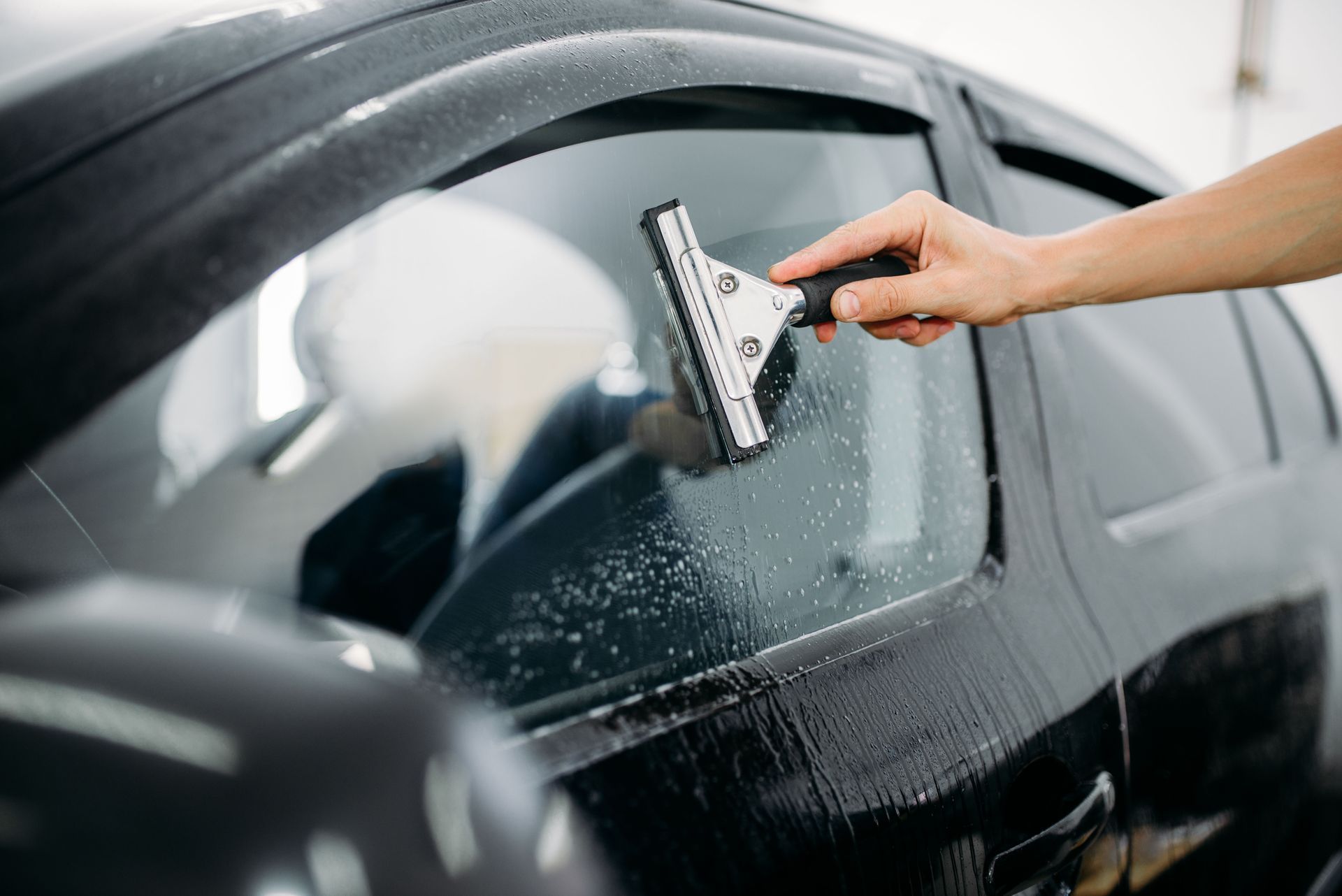
Beyond managing dust, the physical application of the film requires a high degree of manual dexterity and specialized pressure tools. Squeegees of varying hardness levels must be used at precise angles to evacuate the mounting solution without tearing the delicate top layer of the film. Incorrect pressure leaves pockets of water behind, causing hazy pockets that distort vision and ruin the clarity of the glass. Once the adhesive activates against the glass, correcting alignment mistakes or removing trapped debris becomes impossible without completely destroying the film and starting over from scratch.
Avoiding Modern Electronic Interference
Modern automobiles are complex networks of advanced electronics, featuring communication modules, global positioning sensors, and digital antennas integrated directly into or near the glass surfaces. Traditional window films often utilize microscopic metallic particles to reflect solar energy, which can inadvertently act as a shield against radio frequencies. An inexperienced individual choosing film based solely on shade darkness might accidentally block their cellular reception, disrupt satellite navigation signals, or render their tire pressure monitoring systems completely useless.
In addition to signal blockage, the physical application process poses a severe risk to sensitive internal components. The installation process requires a significant volume of specialized liquid solutions to slide the film into place before squeegeeing. Professional shops use specialized absorbent materials, ropes, and shields to protect the complex wiring harnesses, computers, and fuse boxes hidden beneath dashboards and side panels. An unprotected installation can allow water to seep into expensive electronic control units, causing immediate short circuits and leaving the vehicle owner with thousands of dollars in diagnostic and repair fees.
Maintaining Local Highway Compliance
Every jurisdiction enforces strict legal standards regarding the darkness and reflectivity of automotive glass, primarily to ensure driver visibility and law enforcement safety. These regulations dictate specific visible light transmission percentages for the front side windows, rear side windows, and the back windshield. Figuring out these legal numbers can be incredibly confusing for consumers, as the glass from the factory already possesses a slight tint that must be factored into the final calculation. A consumer might apply a legal film over factory glass, only to discover the combination drops the total light transmission below the legal limit.
Operating a vehicle that fails to comply with local transportation codes carries significant legal and financial risks. Law enforcement officers carry specialized digital meters to test windows during routine stops, and non-compliant vehicles face hefty fines and mandatory removal orders. Furthermore, if a vehicle with illegal window film is involved in an accident, insurance providers may deny coverage claims, citing reduced visibility as a contributing factor. Utilizing a certified professional for your auto tint installation guarantees that the materials used are fully compliant with local laws, providing a certified receipt that protects you from legal liability.
Achieving Superior Long Term Value
When evaluating the cost of modifying a vehicle, looking only at the initial price of retail kits creates a false impression of savings. The total cost of an unsuccessful attempt includes the original purchase price, the cost of specialized tools, and the inevitable expense of removing ruined film. Removing failed adhesive from glass is a grueling process that often requires specialized chemicals and steam machines to avoid damaging the delicate rear defroster lines. Most individuals who attempt the project end up scheduling a professional auto tint installation anyway, paying significantly more than if they had skipped the personal attempt entirely.
Opting for an expert application from the start provides significant long-term financial advantages that protect your automotive investment. High-end installations feature extensive manufacturer warranties that cover color stability, bubbling, peeling, and delamination for as long as you own the vehicle. This level of protection ensures that the film retains its heat-rejecting properties and crystal-clear appearance for years, maintaining the resale value of the automobile. Ultimately, the precision, durability, and peace of mind provided by a professional service make it the most financially sound choice for enhancing your vehicle. Contact The Tint Factory today to schedule an expert
auto tint installation and ensure your vehicle receives the flawless finish and superior protection it deserves.

Share On: